Editor
I currently work on publications for the Food and Agriculture Organization of the United Nations, where I support teams in the Forestry Division (NFO), Fisheries and Aquaculture Division (NFI), Plant Production and Protection Division (NSP), and the Regional Office for Asia and the Pacific (FAORAP), serving as an editor, proofreader, manuscript editor, and document specialist. I am on FAO's PSA.EDI roster and I have a nuanced understanding of the organization's style guide – FAOSTYLE (2024) – as well as proven experience ensuring its application to a wide variety of print and digital publications (all tiers of content categories in FAO's Publications Taxonomy), in order to minimize delays and problems in the Publication Workflow System (PWS). When needed, I liaise with the Office of Communications (OCC) and Unit Publication Coordinators (UPCs), attend FAO Publishing Clinics, and utilize other available resources (such as Publishing at FAO: Strategy and guidance, the FAO Terminology Portal, the FAONOCS Database, and Zotero).
Goals
apply FAOSTYLE
increase audience engagement
improve user experience
unify voice and style
communicate key points to target audiences
improve usability, clarity, fluidity, conciseness, and consistency
ensure smooth publication in the Publication Workflow System
Divisions/offices supported at FAO
Forestry Division (NFO)
Fisheries and Aquaculture Division (NFI)
Plant Production and Protection Division (NSP)
Regional Office of Asia and the Pacific (FAORAP)
Toolkit
FAOSTYLE (2024)
Publishing at FAO
FAO Terminology Portal
FAONOCS Database
FAO Publishing Clinic
Microsoft Word
Adobe Acrobat
Zotero
PWS 5: User manual (Publications Workflow System)
Outputs (copyedited/proofread)
reports
case studies
technical documentation
presentations
flyers
informative notes
concept notes
event invitations
factsheets
brochures
policy briefs
booklets
book of abstracts
operational guidelines
technical briefs
implementation plans
anticipatory action plans
e-learning materials (e.g. handouts, presentations)
web content (e.g. articles, news updates, blog posts, landing pages, websites)
Outputs (written/developed)
style guide for technical documentation
exemplary model texts for internal style guides
presentations providing feedback and guidance
frameworks for brainstorming and planning projects
internal workflows for publication planning
reference lists
*Password protected. To request access, write me an email.
In addition to FAO of the UN, I’ve worked with digital marketing firms, non-profit organizations, international schools, universities, publishing companies and educational consultancies.
United States

Earned an MA in Literary Studies and an MEd in Curriculum & Instruction; worked at Georgia State University, Grady High School, and Vivial.
Argentina

Co-Founded OOMPH! Press; worked at FOX Latin America and Equifax.
Italy

Started working at the Food and Agriculture Organization of the United Nations (FAO); worked at John Cabot University and Marymount International School.
Spain
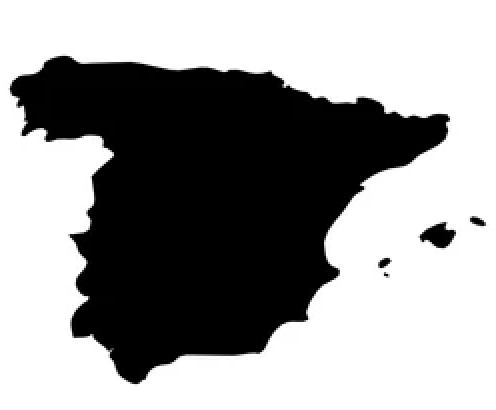
Works with the Food and Agriculture Organization of the United Nations (FAO); supports various publication projects on the local, community level.
Experience

Supervised ~100 undergraduate student writing projects per year, many focused on sustainable development; supported colleagues with writing instruction across the curriculum; co-planned departmental creative writing showcase events.

Coached ~300-600 undergraduate and graduate students on their writing projects per year; mentored colleagues with writing instruction across the curriculum.

Oversaw operations from 2014 to 2026; planned and executed international, multilingual print and digital publication projects showcasing contemporary literature from around the world.

Coached ~50 students on their writing projects per year; assisted Director with rebranding to expand reach; planned events and facilitated workshops.

Collaborated with the Office of Development and the Office of the Headmistress on internal and external communications projects, including website redesign and weekly newsletters.

Researched, wrote, and revised ~60 250-300 word articles per week within a 1-2 day deadline for small business blogs and websites across various industries.
I am captivated by the written word, firmly believing in the power of language and its potential to positively impact the world.
CV
Last updated: October 2025

Bibliography
Selected work with FAO as editor, proofreader, manuscript editor, and document specialist – organized by division (not exhaustive)
Food Production and Protection Division (NSP)
FAO and WHO. 2024. Call for data for the 2025 Joint FAO/WHO Meeting on Pesticide Residues (JMPR): List of substances scheduled for new compounds, periodic re‑evaluation, follow‑up evaluation or new uses, and request for data – September 2025 (Location and dates to be determined). Rome, FAO.
FAO and WHO. 2024. Summary report of the 2024 Joint FAO/WHO Meeting on Pesticide Residues (JMPR): Acceptable daily intakes, acute reference doses, residue definitions, recommended maximum residue levels, supervised trials, median residue and highest residue values, and general consideration items recorded by the 2024 meeting – Rome, 17–26 September 2024 (extra virtual session on 9 October 2024). Rome, FAO.
FAO and WHO. 2025. Pesticide residues in food: Report 2024 – Joint FAO/WHO Meeting on Pesticide Residues. Rome. https://doi.org/10.4060/cd5918en
FAO and WHO. 2025. Pesticide residues in food: Monograph 2024 – Joint FAO/WHO Meeting on Pesticide Residues. Rome. https://doi.org/10.4060/cd5918en
FAO and WHO. forthcoming. Pesticide residues in food: Report 2024 – Joint FAO/WHO Meeting on Pesticide Residues. Rome, FAO.
FAO and WHO. forthcoming. Pesticide residues in food: Monograph 2024 – Joint FAO/WHO Meeting on Pesticide Residues. Rome, FAO.
Regional Office of Asia and the Pacific (FAORAP)
FAO. 2024. Disaster risk finance for anticipatory action in Pakistan. Rome.
FAO. 2024. How social registries can improve vulnerability and risk analysis of rural agriculture populations to support social protection and shock‑responsive programming: Case study from the Lao People’s Democratic Republic. Rome.
FAO. 2024. Operational guidelines to implement the pilot model to link anticipatory action with the existing social assistance system response to natural disaster. Rome.
FAO. 2024. Simulation exercise for drought anticipatory action. Report. Rome.
FAO. 2025. Anticipatory action and social protection for disaster resilience: Lessons learned from South Asia and Southeast Asia. Rome.
FAO. 2025. Impact of anticipatory action – Joint action of the Government of Viet Nam and FAO to safeguard rice and shrimp farmers ahead of El Niño‑induced agricultural drought in the Mekong Delta. Rome.
FAO. 2025. Impact of anticipatory action – Protecting farmers during one of Timor‑Leste’s harshest agricultural droughts in recent decades. Rome.
FAO. 2025. Impact of anticipatory action – Safeguarding Philippine farmers from agricultural drought through government systems. Rome.
FAO. 2025. Impact of anticipatory action for dzud in Mongolia – Protecting livelihoods amid Mongolia’s worst iron dzud in half a century. Rome.
FAO. 2025. Guidelines for managing livestock in flood emergencies. Rome.
Isaev, E., Jones, C., Inthipunya, K., Keomanivong, V., Sysouphanthavong, B., Mahachaleun, M., Phouthanouxay, S., Phetthany, V., Thammalangsy, A., Silatthana, S., Sithivongk, V., Phonsena, M. and Huengbundith, I. 2024. Application of artificial intelligence in anticipatory action: Drought and flood case study in the Lao People’s Democratic Republic. Technical working paper. Rome, FAO.
Fisheries and Aquaculture Division (NFI)
Bianchi, G., Koranteng, K.A. and Tandstad, M., eds. forthcoming. The Nansen Programme – Investigations of fishery resources, capacity development and fisheries management support: A history of the programme and overview of results (1994–2016). FAO Fisheries and Aquaculture Technical Paper, No. XXX. Rome, FAO.
FAO. 2024. African Network on Fish Technology and Safety 2024 – Book of Abstracts. 12–14 November 2024. Rome.
FAO. 2024. Report of the Stakeholder Meeting to Present and Discuss the FAO Study Report on Cross-Border Trade in Artisanal Smoked Fish in West Africa. La Concorde Hotel, Lomé, Togo, 30–31 May 2023/Rapport de la Réunion des parties prenantes pour présenter et discuter le rapport d’étude de la FAO sur le commerce transfrontalier du poisson fumé artisanal en Afrique de l’Ouest. Hôtel La Concorde, Lomé (Togo), 30-31 mai 2023. Rome.
FAO. 2024. Beyond borders: Collaboration for food and nutrition security through sustainable fisheries – Key achievements of the EAF‑Nansen Programme (2017–2023). Rome.
FAO. 2024. Multidimensional solutions strategy for the reduction of food loss and waste in the artisanal fisheries sector in Tumaco, Colombia. Rome.
FAO. 2024. Multidimensional solutions strategy for the reduction of food loss and waste in the dagaa fishery in the United Republic of Tanzania. Rome.
FAO. 2024. Multidimensional solutions strategy for the reduction of food loss and waste in the multiday fisheries sector in Sri Lanka. Rome.
FAO, AUDA-NEPAD and AU-IBAR. 2024. Report of the Regional capacity-building workshop on women’s groups, associations and cooperatives in African small-scale fisheries. Holiday Inn Hotel, Dar es Salaam, United Republic of Tanzania, 5–7 December 2023/Rapport de l’atelier régional de renforcement des capacités des groupements, associations et coopératives de femmes dans la pêche artisanale en Afrique. Hôtel Holiday Inn, Dar es Salam (République-Unie de Tanzanie), 5-7 décembre 2023. Rome, FAO.
Forestry Division (NFO)
FAO. 2022. National Forest Monitoring. In: FAO. https://www.fao.org/forest-monitoring/en
FAO. 2022. SEPAL platform. Rome. https://sepal.io
FAO. 2022. Forest and Land Monitoring for Climate Action. SEPAL MOOC.
FAO. 2023. Monitoring gender equality and social inclusion in forest and landscape restoration programmes.
FAO. 2023. UNEP report.
FAO. 2023. SEPAL documentation. Rome. https://docs.sepal.io/en/latest
FAO. 2023. Global transformation of forests for people and climate: a focus on West Africa – Needs assessment on forest data & capacity.
FAO. 2023. Strengthening the forestry legal framework in Sierra Leone: Transboundary challenges and deforestation trends in the Upper Guinean forest ecosystem.
FAO. 2023. Strengthening the forestry legal framework in Ghana: Transboundary challenges and deforestation trends in the Upper Guinean forest ecosystem.
FAO. 2023. Strengthening the forestry legal framework in The Gambia: Transboundary challenges and deforestation trends in the Upper Guinean forest ecosystem.
FAO. 2023. Strengthening the forestry legal framework in Liberia: Transboundary challenges and deforestation trends in the Upper Guinean forest ecosystem.
FAO. 2023. Integration of SEPAL into the Uganda National Forest Monitoring System. Case study.
FAO. 2023. SEPAL highlights presentation.
FAO. 2024. Building a sustainable circular bioeconomy in Africa through forest products.
FAO. 2024. Comparative study of carbon rights in the context of jurisdictional REDD+: Case studies from Africa, Asia-Pacific and Latin-America.
FAO. 2024. Digital public infrastructure for compliance with the European Union Deforestation Regulation (EUDR): What is in that plot? (Whisp) tool to implement convergence of evidence. Rome, FAO.
FAO. 2024. Enhancing community resilience to climate change in mountain watersheds: Project of the Food and Agriculture Organization of the United Nations and the Ministry of Agriculture, Forestry and Fisheries of Japan (FAO–MAFF) – Brochure. Rome, FAO.
FAO. 2024. How coffee value chains foster climate‑resilient livelihoods: The Food and Agriculture Organization of the United Nations–Slow Food Coffee Coalition experience – Booklet. Rome, FAO.
FAO. 2024. Module 3: High-integrity measurement, reporting and verification (MRV). Forest and land monitoring for climate action ̶ SEPAL. E-learning course. Rome.
FAO. 2024. Options for addressing the risk of non-permanence for land-based mitigation in carbon crediting programmes. Rome.
FAO. 2024. Successful implementation of the Ecuador National REDD+ Action Plan and early achievement of measurable and reportable results has led to the first disbursement of results‑based payments. Case study.
FAO. 2025. Accelerating Innovative Monitoring for Forests (AIM4Forests) – Mid-term review report. Rome. https://doi.org/10.4060/cd6639en
Jonckheere, I., Hamilton, R., Michel, J.M. and Donegan, E., eds. 2023. Good practices in sample‑based area estimation. White paper. Rome, FAO.
Neeff, T., Merle, C., D'Annunzio, R., O'Brien, V. and Gill, V. 2024. Countries’ forest monitoring and deforestation‑related requirements in commodity production. White paper. Rome, FAO.
Neeff, T., Merle, C., D’Annunzio, R., O’Brien, V., Gill, G., Poultouchidou, A., and Fox, J. 2024. Forest monitoring for transparent commodity supply chains. White paper. Rome, FAO. https://doi.org/10.XXXX/cdXXXXen
Phyo, P., Piazza, M. & Hojas Gascon, L. 2025. Bamboo resources assessment – A methodological approach using the System for Earth Observation Data Access, Processing and Analysis for Land Monitoring (SEPAL) with case studies in Asia. Rome, FAO. https://doi.org/10.4060/cd5462en
Sandker, M., Lindquist, E., Poultouchidou, A., Gill, G., Santos‑Acuña, L., Neeff, T. & Fox, J. 2024. Technological innovation driving transparent forest monitoring and reporting for climate action. Rome, FAO.
Shapiro, A.C., d’Annunzio, R., Merle, C. and Bernhard, K.P. 2025. A global methodology for the assessment of direct drivers associated with deforestation and degradation – Using Open Foris solutions for informed decisions. Rome, FAO.https://doi.org/10.4060/cd5462en